
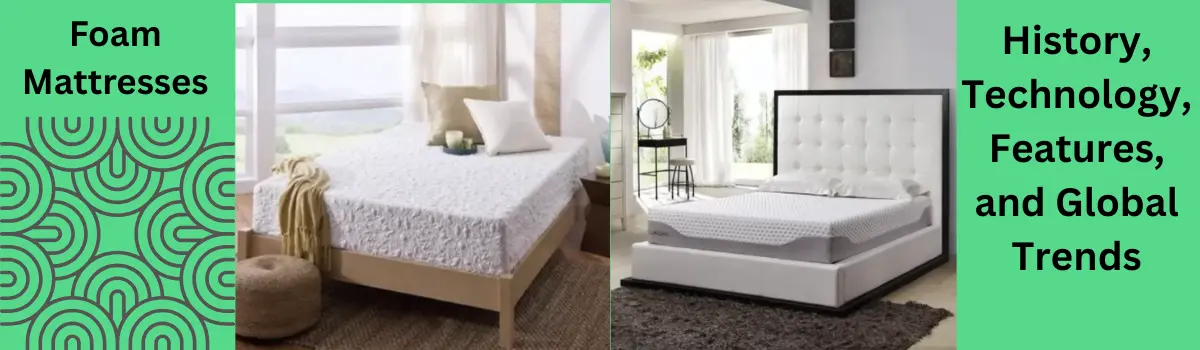
Foam Mattresses: History, Technology, Features, and Global Trends
This article is dedicated to foam mattresses, their evolution over the decades, and the advancements in material science and manufacturing technology that have transformed them into highly engineered sleep products. Today, foam mattresses are produced with different structures, densities, material properties, and compositions, and they play an important role in the global mattress industry.
Origin and Development of Foam Mattresses
The development of foam mattresses is closely linked to the invention of polyurethane materials in the early 20th century. Polyurethane foam, the most widely used foam in mattresses, was first developed in 1937 by Otto Bayer and his research team at IG Farben in Germany.
By the 1950s and 1960s, polyurethane foam began to be widely used in furniture cushioning and mattresses because it was lightweight, flexible, and relatively economical to produce.
What is a Foam Mattress?
A foam mattress is primarily made from polyurethane-based foam materials that form the support and comfort layers of the mattress. Depending on the design, foam mattresses may include several layers such as: Polyurethane foam (PU foam), Memory foam (viscoelastic foam), Rebounded Foam, Latex foam & High-resilience (HR) foam.
These layers work together to provide cushioning, pressure relief, and structural support.
Foam Structure: The open-cell structure of flexible polyurethane foam makes it suitable for use in mattresses. In this structure, the cells of the foam are interconnected, allowing air to move through the material.
Benefits of Open-Cell Foam: Better airflow through the mattress, Improved breathability, Reduced heat buildup, Enhanced sleeping comfort
Foam Density and Mattress Performance
Foam density is one of the most important parameters that determine mattress durability, comfort, and performance. Density is typically measured in kilograms per cubic meter (kg/m³).
Common foam densities used in mattresses generally range from 24 to 40 kg/m³.
Higher-density foams generally provide: Better structural support, Improved durability & Longer mattress lifespan.
Key Features of Foam Mattresses
Body Contouring: Foam mattresses adapt to the shape of the body and help distribute weight evenly.
Pressure Relief: They reduce pressure on sensitive areas such as the shoulders, hips, and lower back.
Motion Isolation: Foam absorbs movement effectively, minimizing disturbance for sleeping partners.
Lightweight Construction: Compared to traditional spring mattresses, foam mattresses are generally lighter and easier to handle.
Benefits of Foam Mattresses: Comfortable and adaptive sleeping surface, Suitable for different sleeping positions, Reduced motion transfer between sleeping partners, Wide variety of firmness levels and mattress designs.
Global Mattress Production and Consumption
The global mattress industry has grown significantly due to increasing awareness of sleep health and rising living standards. Worldwide mattress production is estimated at over 500 million units annually, reflecting the large scale of global bedding consumption.
Production is concentrated in several major manufacturing regions, with countries such as China, United States, and Brazil playing key roles in global mattress production.
The growth of e-commerce and improvements in compression packaging technology have further accelerated the expansion of foam mattress markets worldwide.
Written by the Foam Villa Editorial Lab: Analyzing the global trends and chemical innovations that define the future of flexible polyurethane. From raw material sourcing to precision fabrication, we are your partner in high-performance foam solutions.
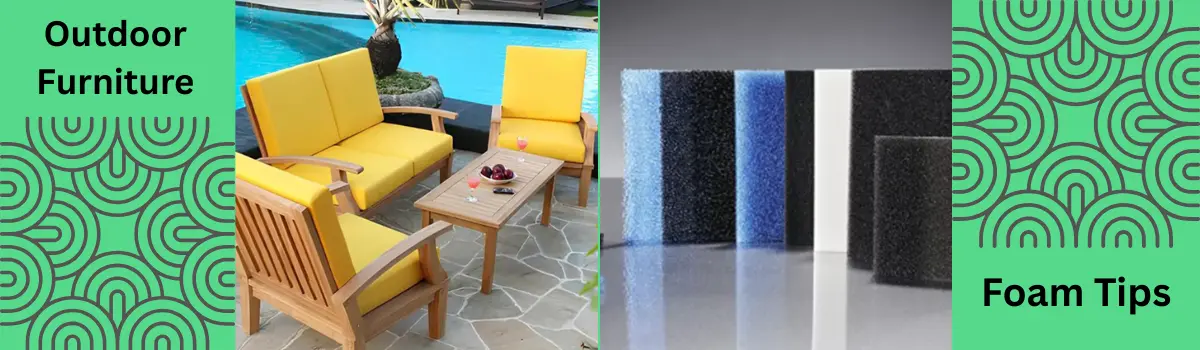
Outdoor Furniture Foam Types: Materials, Features, and Applications
Outdoor furniture has become an important part of modern living spaces, including gardens, patios, balconies, and poolside areas. Cushions used in outdoor furniture must withstand challenging environmental conditions such as sunlight, moisture, rain, and temperature changes. Because of these factors, the selection of the right outdoor furniture foam is essential for durability, comfort, and long-term performance.
Applications: Poolside furniture, Boat seating, Garden lounge cushions, Outdoor sofas and chairs.
Requirements for Outdoor Furniture Foam: Unlike indoor furniture foam, outdoor cushions must be designed to handle environmental exposure. Key requirements include Water resistance or quick drainage, Resistance to mold and mildew, UV stability, Good air circulation, Durability under frequent use.
Common Types of Outdoor Furniture Foam
a.) Polyurethane Foam (PU Foam): Polyurethane foam is one of the most widely used materials in furniture cushions due to its versatility and cost-effectiveness. Characteristics: Available in different densities and firmness levels, Lightweight and flexible, Comfortable cushioning.
Usage: Standard PU foam is typically used in outdoor cushions when combined with water-resistant covers or protective liners to reduce moisture absorption.
b.) Quick-Dry Foam (Reticulated Foam): Reticulated foam, commonly known as quick-dry foam, is specifically designed for outdoor environments. During manufacturing, the foam structure is modified to create large, interconnected pores, allowing water to pass through quickly. Characteristics: Highly open cell structure, Rapid water drainage, Excellent airflow and ventilation, Resistant to mold and mildew.
Because of its drainage properties, quick-dry foam is widely considered one of the best foam types for outdoor furniture.
c.) Latex Foam: Latex foam, derived from natural or synthetic rubber, is also used in certain outdoor cushion applications.
Characteristics: High elasticity, Durable structure, Good breathability
Foam Density Considerations for Outdoor Furniture
Foam density plays a critical role in the performance of outdoor cushions. Density is typically measured in kilograms per cubic meter (kg/m³).
Typical ranges include:
Low Density Foam: 20–24 kg/m³ (light-use cushions)
Medium Density Foam: 25–30 kg/m³ (general outdoor seating)
High Density Foam: 30–40 kg/m³ (premium outdoor furniture)
Note: Higher density generally results in better durability and longer cushion life.
Importance of Breathability and Drainage
Outdoor cushions must allow moisture to escape to prevent mold and odor. Foam with open-cell or reticulated structures allows air and water to pass through easily.
Key benefits include: Faster drying after rain, Reduced risk of mold growth, Improved comfort in humid climates
Choosing the Right Foam for Outdoor Furniture
When selecting foam for outdoor furniture, several factors should be considered: Exposure to rain and moisture, Frequency of use, Desired comfort level, Cushion thickness and firmness, Fabric and cover materials used
Conclusion
Outdoor furniture foam plays a crucial role in the comfort, durability, and performance of outdoor seating products. From standard polyurethane foam and high-resilience foam to specialized quick-dry reticulated foam, manufacturers have developed several materials suited to outdoor conditions.
Selecting the right foam type, density, and cushion construction ensures that outdoor furniture remains comfortable, durable, and resistant to environmental exposure over time.
Written by the Foam Villa Editorial Lab: Analyzing the global trends and chemical innovations that define the future of flexible polyurethane. From raw material sourcing to precision fabrication, we are your partner in high-performance foam solutions.
The Origin, Safety, and Back Support Benefits of Coir Mattresses
In the world of natural bedding solutions, coir mattresses have gained significant attention for their eco-friendly composition, firm support, and comparatively safer fire behavior. Made from natural coconut fiber, coir mattresses combine traditional materials with modern mattress manufacturing technology. Because of their breathable structure and firmness, they are often considered a good back support mattress option.
The Origin of Coir Mattresses: The coir mattress originated in regions where coconuts were abundant, particularly in India and Sri Lanka. The use of coir fiber, extracted from coconut husk, evolved gradually over time rather than being invented at a single moment in history.
The modern rubberized coir mattress—the form widely used today—was developed between the 1930s and 1950s when natural latex was introduced to bond coir fibers into a resilient and structured mattress core.
What is a Coir Mattress?
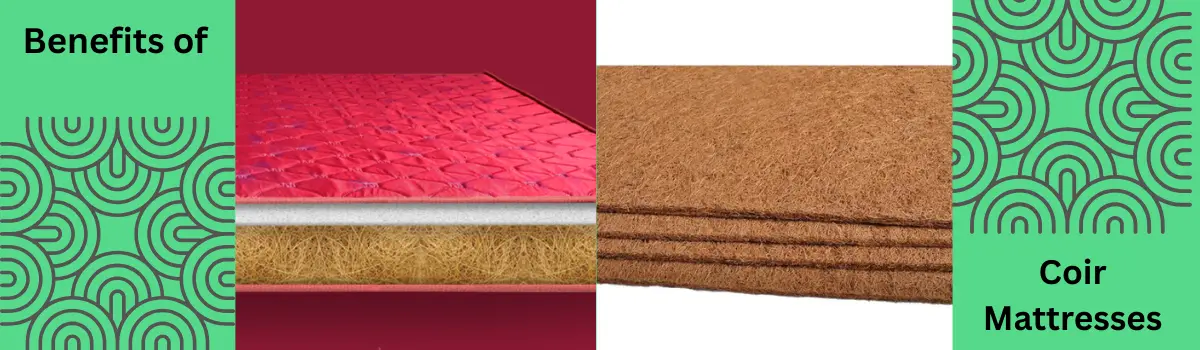
A coir mattress is made from natural coconut fibers known as coir. These fibers are extracted from coconut husks, processed, and compressed into mattress layers. In many modern designs, coir layers are combined with latex or foam layers to enhance comfort and flexibility while maintaining the firmness of the mattress.
Advantages of Coir Mattresses: Firm Support, Good Air Circulation & Eco-Friendly Material.
Limitations of Coir Mattresses: Lower Durability (Fibers may gradually break down with prolonged use), Limited Comfort (Some people may find the mattress too firm), Moisture Sensitivity (Coir can absorb moisture in humid environments.)
Fire Safety Considerations: Coir mattresses are comparatively safer in case of fire. Natural coir fiber, derived from coconut husk, possesses inherent fire-resistant properties and does not ignite easily. In the event of fire, coir tends to burn slowly and produces significantly lower levels of toxic smoke and gases compared to PU foam. This characteristic makes coir mattresses a safer bedding material when compared to many synthetic foam products.
Back Support Benefits of Coir Mattresses: One of the most important coir mattress benefits is its excellent back support. Because of the natural structure and firmness of coconut fibers, these mattresses help maintain proper spinal alignment during sleep. They offer: Natural firmness for spinal alignment, Even weight distribution, Reduced pressure on the lower back, Suitable support for growing children & Beneficial for people who prefer firm or hard beds
Written by the Foam Villa Editorial Lab: Analyzing the global trends and chemical innovations that define the future of flexible polyurethane. From raw material sourcing to precision fabrication, we are your partner in high-performance foam solutions.
