
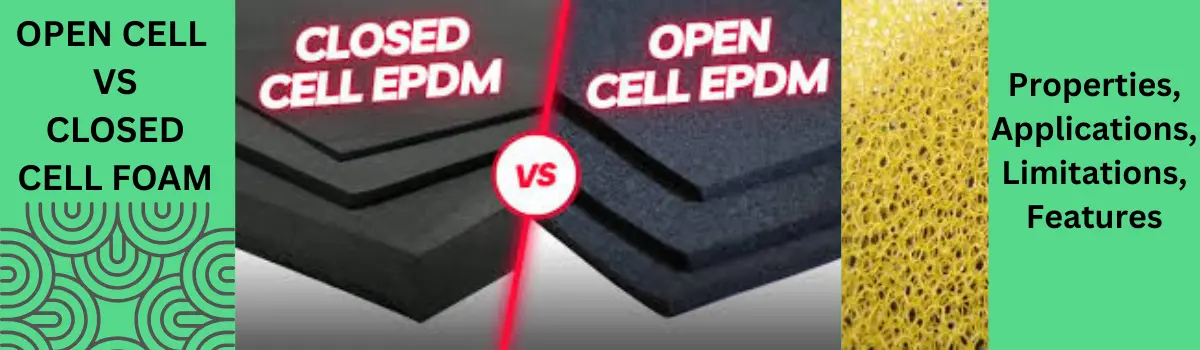
Open Cell vs Closed Cell Foam: Applications, Comfort & Key Differences
Foam is one of the most versatile materials used across industries—from furniture and bedding to packaging and insulation. However, not all foams are the same. The two primary types—open-cell foam and closed-cell foam—differ significantly in structure, performance, and application.
Understanding these differences is essential for choosing the right material for your specific needs.
Open-Cell Foam: Its features, comfort level, applications & limitations
Open-cell foam is characterized by interconnected cells, allowing air to pass through the material easily. This structure gives it a soft, breathable, and flexible nature.
Key Features: Soft and compressible, High air permeability, Lightweight, Excellent sound absorption
Comfort Level: Open-cell foam is widely preferred for comfort applications. It adapts to body shape, making it ideal for prolonged use where cushioning is important.
Common Applications: Mattresses, Sofa and cushion padding, Acoustic panels, Pillows and upholstery.
Limitations: Absorbs moisture therefore not suitable for outdoor or wet environments
Closed-Cell Foam : Its features, comfort level, applications & limitations
Closed-cell foam consists of sealed, tightly packed cells that prevent air and moisture from passing through. This makes it denser, stronger, and more resistant to external elements.
Key Features: Firm and rigid structure, Water-resistant or waterproof, High strength and durability, Excellent thermal insulation
Comfort Level: Closed-cell foam is less comfortable for prolonged sitting or sleeping due to its firmness. However, it provides strong support and resilience.
Common Applications: Industrial and export packaging, Thermal insulation (construction, HVAC), Automotive components, Marine applications, Sports mats (EVA foam, yoga mats)
Limitations: Limited breathability, Lower comfort compared to open-cell foam, generally higher cost
Open Cell vs Closed Cell Foam: A Comparison
| Feature | Open-Cell Foam | Closed-Cell Foam |
| Comfort | Soft & plush | Firm & supportive |
| Breathability | High | Very low |
| Water Resistance | Low | High |
| Strength | Moderate | High |
| Insulation | Moderate | Excellent |
| Best Use | Comfort products | Industrial & protective uses |
Choosing the Right Foam
The choice between open-cell and closed-cell foam depends on the intended application:
For comfort and cushioning: Open-cell foam is the better option due to its softness and flexibility.
For protection and durability: Closed-cell foam is ideal because of its strength and resistance to moisture.
For combined performance: Many modern products use a hybrid approach—a firm closed-cell base for support with a soft open-cell top layer for comfort.
Conclusion: Both open-cell and closed-cell foams have their unique advantages. While open-cell foam excels in comfort and breathability, closed-cell foam stands out in durability and protection.
Selecting the right type ensures better performance, longer product life, and improved user experience—whether in furniture, packaging, or industrial applications.
Written by the Foam Villa Editorial Lab Specializing in high-performance rebonded solutions and sustainable polymer engineering. We help industries optimize support and minimize waste through advanced foam technology.
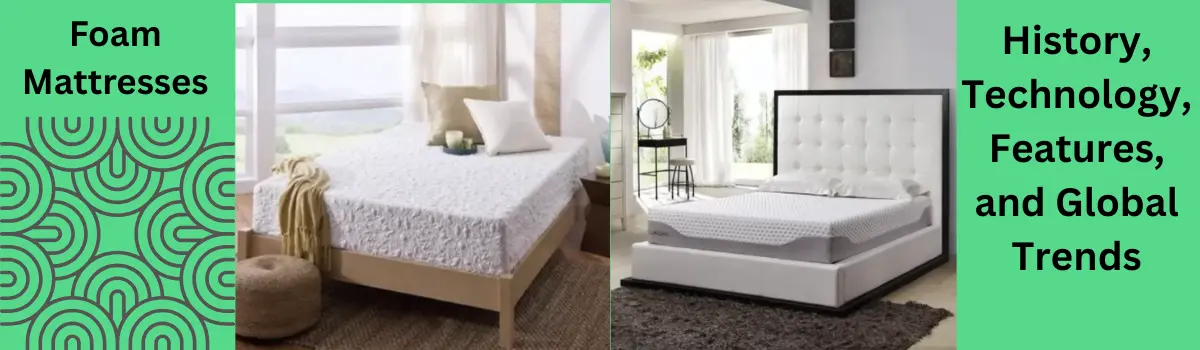
Foam Mattresses: History, Technology, Features, and Global Trends
This article is dedicated to foam mattresses, their evolution over the decades, and the advancements in material science and manufacturing technology that have transformed them into highly engineered sleep products. Today, foam mattresses are produced with different structures, densities, material properties, and compositions, and they play an important role in the global mattress industry.
Origin and Development of Foam Mattresses
The development of foam mattresses is closely linked to the invention of polyurethane materials in the early 20th century. Polyurethane foam, the most widely used foam in mattresses, was first developed in 1937 by Otto Bayer and his research team at IG Farben in Germany.
By the 1950s and 1960s, polyurethane foam began to be widely used in furniture cushioning and mattresses because it was lightweight, flexible, and relatively economical to produce.
What is a Foam Mattress?
A foam mattress is primarily made from polyurethane-based foam materials that form the support and comfort layers of the mattress. Depending on the design, foam mattresses may include several layers such as: Polyurethane foam (PU foam), Memory foam (viscoelastic foam), Rebounded Foam, Latex foam & High-resilience (HR) foam.
These layers work together to provide cushioning, pressure relief, and structural support.
Foam Structure: The open-cell structure of flexible polyurethane foam makes it suitable for use in mattresses. In this structure, the cells of the foam are interconnected, allowing air to move through the material.
Benefits of Open-Cell Foam: Better airflow through the mattress, Improved breathability, Reduced heat buildup, Enhanced sleeping comfort
Foam Density and Mattress Performance
Foam density is one of the most important parameters that determine mattress durability, comfort, and performance. Density is typically measured in kilograms per cubic meter (kg/m³).
Common foam densities used in mattresses generally range from 24 to 40 kg/m³.
Higher-density foams generally provide: Better structural support, Improved durability & Longer mattress lifespan.
Key Features of Foam Mattresses
Body Contouring: Foam mattresses adapt to the shape of the body and help distribute weight evenly.
Pressure Relief: They reduce pressure on sensitive areas such as the shoulders, hips, and lower back.
Motion Isolation: Foam absorbs movement effectively, minimizing disturbance for sleeping partners.
Lightweight Construction: Compared to traditional spring mattresses, foam mattresses are generally lighter and easier to handle.
Benefits of Foam Mattresses: Comfortable and adaptive sleeping surface, Suitable for different sleeping positions, Reduced motion transfer between sleeping partners, Wide variety of firmness levels and mattress designs.
Global Mattress Production and Consumption
The global mattress industry has grown significantly due to increasing awareness of sleep health and rising living standards. Worldwide mattress production is estimated at over 500 million units annually, reflecting the large scale of global bedding consumption.
Production is concentrated in several major manufacturing regions, with countries such as China, United States, and Brazil playing key roles in global mattress production.
The growth of e-commerce and improvements in compression packaging technology have further accelerated the expansion of foam mattress markets worldwide.
Written by the Foam Villa Editorial Lab: Analyzing the global trends and chemical innovations that define the future of flexible polyurethane. From raw material sourcing to precision fabrication, we are your partner in high-performance foam solutions.
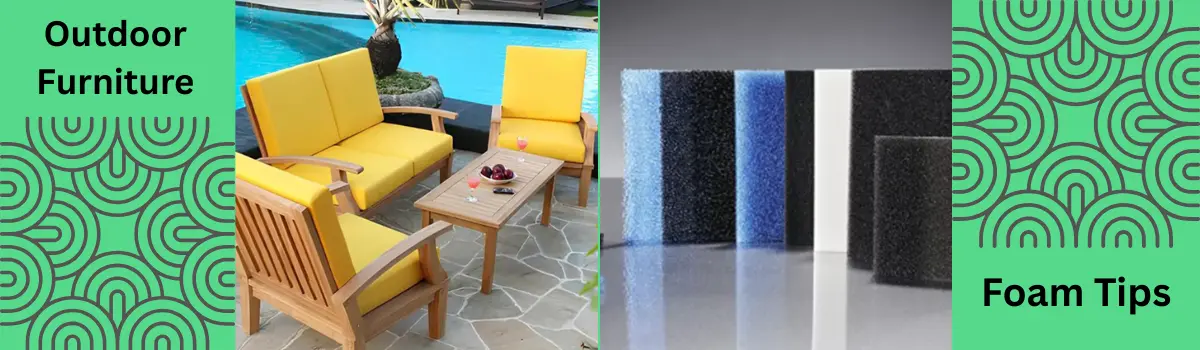
Outdoor Furniture Foam Types: Materials, Features, and Applications
Outdoor furniture has become an important part of modern living spaces, including gardens, patios, balconies, and poolside areas. Cushions used in outdoor furniture must withstand challenging environmental conditions such as sunlight, moisture, rain, and temperature changes. Because of these factors, the selection of the right outdoor furniture foam is essential for durability, comfort, and long-term performance.
Applications: Poolside furniture, Boat seating, Garden lounge cushions, Outdoor sofas and chairs.
Requirements for Outdoor Furniture Foam: Unlike indoor furniture foam, outdoor cushions must be designed to handle environmental exposure. Key requirements include Water resistance or quick drainage, Resistance to mold and mildew, UV stability, Good air circulation, Durability under frequent use.
Common Types of Outdoor Furniture Foam
a.) Polyurethane Foam (PU Foam): Polyurethane foam is one of the most widely used materials in furniture cushions due to its versatility and cost-effectiveness. Characteristics: Available in different densities and firmness levels, Lightweight and flexible, Comfortable cushioning.
Usage: Standard PU foam is typically used in outdoor cushions when combined with water-resistant covers or protective liners to reduce moisture absorption.
b.) Quick-Dry Foam (Reticulated Foam): Reticulated foam, commonly known as quick-dry foam, is specifically designed for outdoor environments. During manufacturing, the foam structure is modified to create large, interconnected pores, allowing water to pass through quickly. Characteristics: Highly open cell structure, Rapid water drainage, Excellent airflow and ventilation, Resistant to mold and mildew.
Because of its drainage properties, quick-dry foam is widely considered one of the best foam types for outdoor furniture.
c.) Latex Foam: Latex foam, derived from natural or synthetic rubber, is also used in certain outdoor cushion applications.
Characteristics: High elasticity, Durable structure, Good breathability
Foam Density Considerations for Outdoor Furniture
Foam density plays a critical role in the performance of outdoor cushions. Density is typically measured in kilograms per cubic meter (kg/m³).
Typical ranges include:
Low Density Foam: 20–24 kg/m³ (light-use cushions)
Medium Density Foam: 25–30 kg/m³ (general outdoor seating)
High Density Foam: 30–40 kg/m³ (premium outdoor furniture)
Note: Higher density generally results in better durability and longer cushion life.
Importance of Breathability and Drainage
Outdoor cushions must allow moisture to escape to prevent mold and odor. Foam with open-cell or reticulated structures allows air and water to pass through easily.
Key benefits include: Faster drying after rain, Reduced risk of mold growth, Improved comfort in humid climates
Choosing the Right Foam for Outdoor Furniture
When selecting foam for outdoor furniture, several factors should be considered: Exposure to rain and moisture, Frequency of use, Desired comfort level, Cushion thickness and firmness, Fabric and cover materials used
Conclusion
Outdoor furniture foam plays a crucial role in the comfort, durability, and performance of outdoor seating products. From standard polyurethane foam and high-resilience foam to specialized quick-dry reticulated foam, manufacturers have developed several materials suited to outdoor conditions.
Selecting the right foam type, density, and cushion construction ensures that outdoor furniture remains comfortable, durable, and resistant to environmental exposure over time.
Written by the Foam Villa Editorial Lab: Analyzing the global trends and chemical innovations that define the future of flexible polyurethane. From raw material sourcing to precision fabrication, we are your partner in high-performance foam solutions.
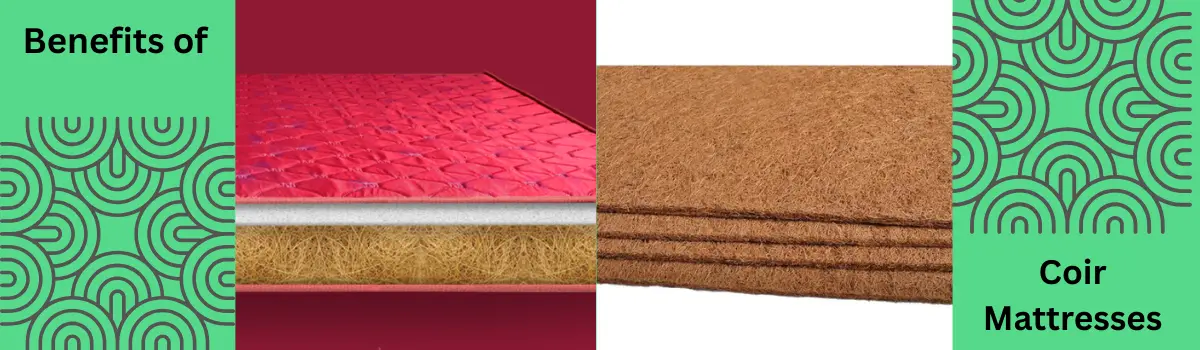
The Origin, Safety, and Back Support Benefits of Coir Mattresses
In the world of natural bedding solutions, coir mattresses have gained significant attention for their eco-friendly composition, firm support, and comparatively safer fire behavior. Made from natural coconut fiber, coir mattresses combine traditional materials with modern mattress manufacturing technology. Because of their breathable structure and firmness, they are often considered a good back support mattress option.
The Origin of Coir Mattresses: The coir mattress originated in regions where coconuts were abundant, particularly in India and Sri Lanka. The use of coir fiber, extracted from coconut husk, evolved gradually over time rather than being invented at a single moment in history.
The modern rubberized coir mattress—the form widely used today—was developed between the 1930s and 1950s when natural latex was introduced to bond coir fibers into a resilient and structured mattress core.
What is a Coir Mattress?
A coir mattress is made from natural coconut fibers known as coir. These fibers are extracted from coconut husks, processed, and compressed into mattress layers. In many modern designs, coir layers are combined with latex or foam layers to enhance comfort and flexibility while maintaining the firmness of the mattress.
Advantages of Coir Mattresses: Firm Support, Good Air Circulation & Eco-Friendly Material.
Limitations of Coir Mattresses: Lower Durability (Fibers may gradually break down with prolonged use), Limited Comfort (Some people may find the mattress too firm), Moisture Sensitivity (Coir can absorb moisture in humid environments.)
Fire Safety Considerations: Coir mattresses are comparatively safer in case of fire. Natural coir fiber, derived from coconut husk, possesses inherent fire-resistant properties and does not ignite easily. In the event of fire, coir tends to burn slowly and produces significantly lower levels of toxic smoke and gases compared to PU foam. This characteristic makes coir mattresses a safer bedding material when compared to many synthetic foam products.
Back Support Benefits of Coir Mattresses: One of the most important coir mattress benefits is its excellent back support. Because of the natural structure and firmness of coconut fibers, these mattresses help maintain proper spinal alignment during sleep. They offer: Natural firmness for spinal alignment, Even weight distribution, Reduced pressure on the lower back, Suitable support for growing children & Beneficial for people who prefer firm or hard beds
Written by the Foam Villa Editorial Lab: Analyzing the global trends and chemical innovations that define the future of flexible polyurethane. From raw material sourcing to precision fabrication, we are your partner in high-performance foam solutions.
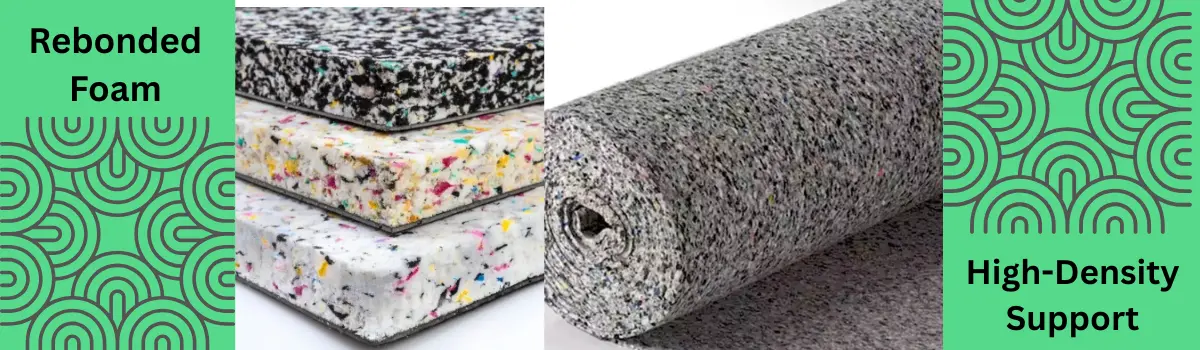
Rebonded Foam: Engineering Circularity and High-Density Support
In the modern manufacturing landscape, the transition from a linear “take-make-waste” model to a circular economy is no longer optional. Rebonded foam stands at the forefront of this shift. Far from being a mere byproduct, rebonded foam is a sophisticated, high-density engineered material created through the precise recycling of polyurethane scraps. It represents the perfect intersection of environmental stewardship and industrial-grade performance.
The Mechanics of the Rebonding Process
The transformation of loose foam scrap into a structural block is a feat of mechanical engineering. Unlike virgin foam, which relies on a chemical reaction to rise, rebonded foam is “constructed.”
Precision Shredding & Pulverization: Advanced technology now allows manufacturers to crush foam into nearly powder-like particles. This reduction in “chip size” is critical; the smaller the particle, the more uniform the final block’s cellular structure.
Polymer Bonding: These particles are coated with high-performance prepolymer bonding agents. The quality of this adhesive determines the foam’s “tear strength” and long-term resilience.
Thermo-Compression: The mixture is subjected to intense hydraulic pressure and steam injection. This is where density is dictated. While standard grades range from 60 to 110 kg/m³, latest-generation technology can compress these particles into ultra-high-density grades reaching 220 kg/m³. At this level, the foam becomes almost as rigid as wood but retains the vibration-dampening properties of a polymer.
Why Density Dictates Application
The versatility of rebonded foam is a direct result of its customizable density. Because the “mass per unit volume” can be controlled during the pressing stage, it can be tailored to specific industrial needs:
Orthopedic Foundation (80–120 kg/m³): In the bedding industry, rebonded foam serves as the “core” or base layer. It provides a non-sagging foundation that supports the heavier areas of the human body, ensuring the softer comfort layers above it perform optimally.
Acoustic & Vibration Control (120–180 kg/m³): Due to its high mass and irregular internal structure (created by the various foam chips), rebonded foam is an exceptional sound absorber. It is widely used in automotive floorings and generator room insulation to dampen low-frequency vibrations.
Industrial Impact Protection (200+ kg/m³): The highest grades are utilized in sports flooring, heavy-duty packaging, and gym mats where the material must withstand repetitive, high-impact force without permanent deformation.
Environmental Impact and Market Insights
The global demand for rebonded foam is surging, driven by a “Green Manufacturing” mandate. By consuming foam scrap—which would otherwise contribute to landfill volume—this process cleans the environment while providing a cost-effective alternative to virgin materials.
For the consumer and the industrial buyer, the benefits are clear: rebonded foam offers a higher Support Factor and greater Durability than many standard foam grades, often at a lower price point. It is a rare example of a recycled product outperforming the original in specific high-load applications.
Final Insight
Rebonded foam is not just “recycled foam”; it is a reclaimed asset. Its ability to be engineered to extreme densities (up to 220 kg/m³) makes it a vital component in everything from the mattress you sleep on to the car you drive. At Foam Villa, we view this material as a testament to what “Material Intelligence” can achieve for both the industry and the planet.
Written by the Foam Villa Editorial Lab Specializing in high-performance rebonded solutions and sustainable polymer engineering. We help industries optimize support and minimize waste through advanced foam technology.
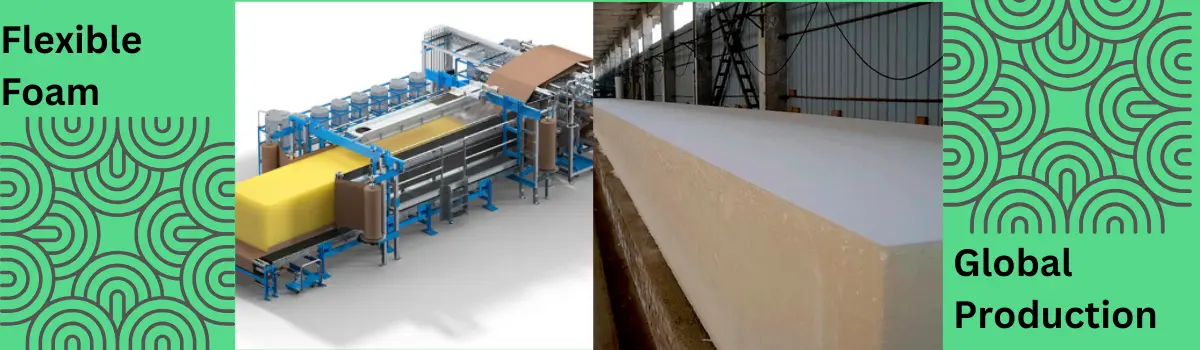
Global Flexible Foam Production: Engineering Comfort on a Global Scale
Flexible Polyurethane (PU) foam is one of the most versatile synthetic materials ever engineered. As of late 2025, the global market for flexible foam has reached a valuation of approximately $56.8 billion, with projections to climb to $75.2 billion by 2029. This growth is underpinned by a 7.3% CAGR, driven by a dual demand for lightweight electric vehicle (EV) interiors and high-performance ergonomic bedding.
At Foam Villa, we recognize that flexible foam is not just a commodity; it is a critical functional material that dictates the user experience in everything from automotive seating to medical positioning pads.
The Global Market Landscape: Regional Powerhouses
While North America and Europe remain hubs for specialty foams and sustainable innovation, the center of gravity for production continues to shift East.
Asia-Pacific Dominance: This region currently holds a massive 46% share of the global market. Driven by the automotive hubs and urbanization in China and India, APAC is not only the largest producer but also the fastest-growing market, expanding at nearly 7.8% annually.
The Sustainability Mandate in Europe: European manufacturers are leading the “Circular Economy” shift. Innovations like CO2-based polyols and chemical recycling—breaking down old PU into its original liquid components—are now becoming the industry standard to meet 2030 “Net Zero” targets.
North American Innovation: Focus has shifted toward “Bed-in-a-Box” logistics and advanced healthcare foams, with a strong emphasis on reducing VOC (Volatile Organic Compound) emissions.
The Chemistry of Flexibility: Advanced Raw Materials
The “feel” and “durability” of flexible foam are determined long before the foam rises. It is a precise chemical orchestration:
Bio-Based Polyols: In 2025, there is a significant surge in renewable polyols derived from vegetable oils and lignocellulosic biomass. These are the fastest-growing feedstock segment, logging a 6.9% CAGR as industries move away from petroleum.
Next-Gen Blowing Agents: To meet environmental regulations like the Kigali Amendment, the industry has transitioned to HFOs (Hydrofluoroolefins) and water-based CO2 systems, which have zero Ozone Depletion Potential (ODP) and ultra-low global warming potential.

The Strategic Role of Precision Foam Components
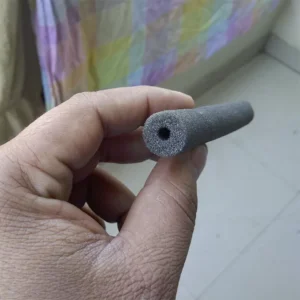 In the modern industrial ecosystem, success is built on the reliability of small, often invisible parts. Precision foam components, fabricated from a wide range of polyurethane (PU) formulations, have become essential assets in enhancing product comfort, structural protection, and operational efficiency. By transforming raw polymers into engineered components, we are supporting diverse sectors—from high-performance aerospace modules to life-saving medical devices.
The Architecture of a Component: Precision and Function
A foam component is far more than a simple cutout; it is a meticulously engineered part designed to solve specific physical challenges. Utilizing world-class conversion technology, these components are fabricated to maintain consistent thickness and exact tolerances. This precision allows for seamless integration into high-speed assembly lines, effectively streamlining the manufacturing process while significantly elevating the quality of the final product.
Industry-Specific Integration
The versatility of PU foam components allows them to serve as a sophisticated “multi-tool” across diverse sectors:
Automotive Engineering: Foam components are vital for NVH (Noise, Vibration, and Harshness) management. Custom-fabricated seals and gaskets within dashboards, door panels, and HVAC systems ensure cabin quietness and thermal regulation.
Electronics & Semiconductors: In the world of micro-technology, foam components act as thermal gap fillers and shock absorbers, safeguarding delicate circuitries from the twin threats of heat and kinetic energy.
Medical & Healthcare: Beyond simple padding, medical-grade components are used for equipment cushioning and sterile packaging inserts, ensuring the integrity of high-value diagnostic tools.
Building Science & Construction: High-density foam components provide the airtight and watertight seals necessary for energy-efficient windows, roofing systems, and industrial HVAC units.
Aerospace & Defense: Lightweight but durable, these components assist in weight reduction while providing critical vibration damping for sensitive cockpit instrumentation.
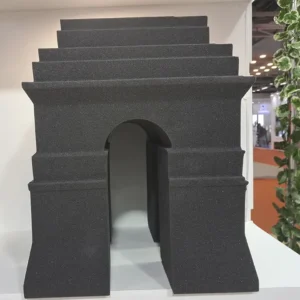
The Multi-Material Advantage: Chemistry and Customization
A key part of our “Foam Knowledge” is selecting the specific chemical family for the task. Whether utilizing Polyether for its hydrolytic stability and moisture resistance or Polyester for its superior chemical and oil resistance, each material choice is intentional. For higher impact protection, Polyethylene and specialized Moulded Foams offer high-density structural integrity.
To meet specific industrial demands, these components are available with secondary processing options. This includes pressure-sensitive adhesive backings for rapid installation, specialized surface coatings for environmental protection, and multi-layer lamination to combine different foam properties into a single, high-performance part.
Key Functional Missions
The “Material Intelligence” of an engineered foam component is defined by its primary role in an assembly. For instance, in Environmental Sealing, the foam creates an impermeable barrier against dust and moisture. In Acoustic Management, the cellular structure is tuned to absorb specific sound frequencies. For Specialized Packaging, the focus shifts to 360-degree contouring, offering total protection for fragile goods during global transit.
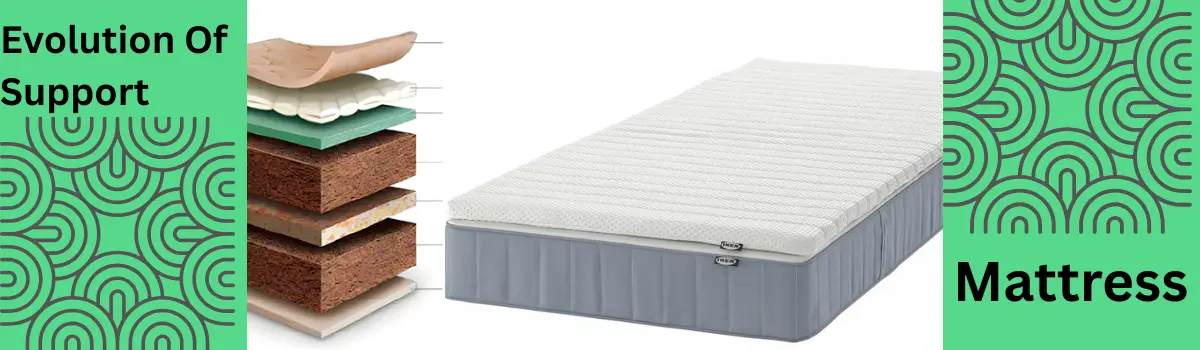
The Evolution of Support: Why the Architecture of Your Mattress Dictates Longevity
On average, a human being will spend nearly approximately one-third of their life—resting on a mattress. Over a single year, an adult accumulates upwards of 3,200 hours of contact time with this single surface. From a technical perspective, the mattress is the most frequently used “equipment” in a household, making its material composition the primary factor in long-term musculoskeletal health.
The Origin of the Mattress: From Necessity to Engineering
The concept of the mattress was born from the basic human need to insulate the body from the cold, hard ground. Early iterations were rudimentary—bags of straw, wool, or horsehair designed for thermal protection rather than orthopedic support.
The true revolution occurred during the industrial era with the introduction of steel coils, but it was the mid-20th-century development of Polyurethane and Memory Foams that changed everything. This shift allowed for “Contouring Support,” where the material finally began to adapt to the human shape, rather than forcing the human body to adapt to the surface. Today, we view the mattress not as a bag of filler, but as a sophisticated multi-layered system designed to manage gravity.
The Mechanics of Orthopedic Integrity
A high-performance mattress must solve two conflicting physical problems: it must be soft enough to relieve pressure but firm enough to maintain spinal neutrality.
When a surface fails to provide Pressure Relief, blood flow is restricted to the skin and soft tissues, triggering the brain to command the body to move. This “tossing and turning” disrupts the deep sleep cycles necessary for cognitive repair. Simultaneously, Spinal Alignment is critical; if the mattress allows the hips to sink too deeply, the lumbar spine is placed under constant tension, leading to the chronic back pain that plagues many modern professionals.
Individualized Requirements: Weight, Age, and Physiology
There is no “universal” mattress because human anatomy varies significantly across different demographics. The effectiveness of a support system is largely determined by the “load” placed upon it.
- Weight Dynamics: Heavier individuals require higher-density foam cores and higher ILD (Indentation Load Deflection) ratings to prevent “bottoming out.” Conversely, lighter individuals may find high-density foam too rigid, as they lack the body mass to engage the foam’s contouring properties.
- The Aging Factor: As we age, skin becomes thinner and joints more sensitive. For seniors, the priority shifts toward high-compliance materials like Latex or Memory Foam that minimize surface tension.
- Health Considerations: For those with chronic respiratory issues or allergies, hypoallergenic materials such as closed-cell foams or treated latex are essential for maintaining air quality during the 8-hour sleep window.

Restorative Logic: Why Sleep is the Ultimate Productivity Tool
In our modern, high-pressure landscape, sleep has evolved from a simple rest period into a critical biological defense mechanism. As our daily lives become increasingly dominated by digital interfaces, sedentary work, and intense professional expectations, the physiological “cost” of being awake has reached an all-time high.
The Digital Toll and Cognitive Fatigue
The shift toward prolonged mobile phone and screen usage has introduced a profound disruption to human biology. The blue light emitted by these devices—specifically within the 450–495 nm range—tricks the brain into suppressing melatonin, the hormone responsible for the onset of sleep. Beyond the chemical impact, the “infinite scroll” of digital content keeps the mind in a state of high arousal. This prevents the mental relaxation required to enter restorative deep sleep, leaving the mind cluttered and leading to a state of chronic burnout.

Physical Burden: Posture and the Modern Lifestyle
Current work-life scenarios have significantly worsened musculoskeletal health. Many professionals spend the majority of their day in a state of physical compression—whether sitting at a desk for eight hours or navigating long, stressful commutes. These activities place immense strain on the spinal discs and cervical muscles. Sleep is the only period during the day when the spine can truly decompress. If this window of rest is neglected, or if the support surface is inadequate, the physical strain of the day is “carried over,” manifesting as chronic pain and long-term spinal degradation.
The Biological Requirement Across the Lifespan
While the general recommendation for adults is seven to nine hours of rest, sleep requirements are actually a moving target that shifts with the body’s developmental stages. Infants and children require significantly more time for rapid physical growth and immune priming, while teenagers need extended rest to facilitate hormonal balancing. For the working adult, seven to eight hours is the non-negotiable threshold for tissue repair and metabolic health.
| Age Group | Recommended Duration | Primary Biological Function |
| Infants & Toddlers | 12 – 16 Hours | Rapid growth and brain development |
| School Age & Teens | 9 – 12 Hours | Cognitive loading and emotional regulation |
