
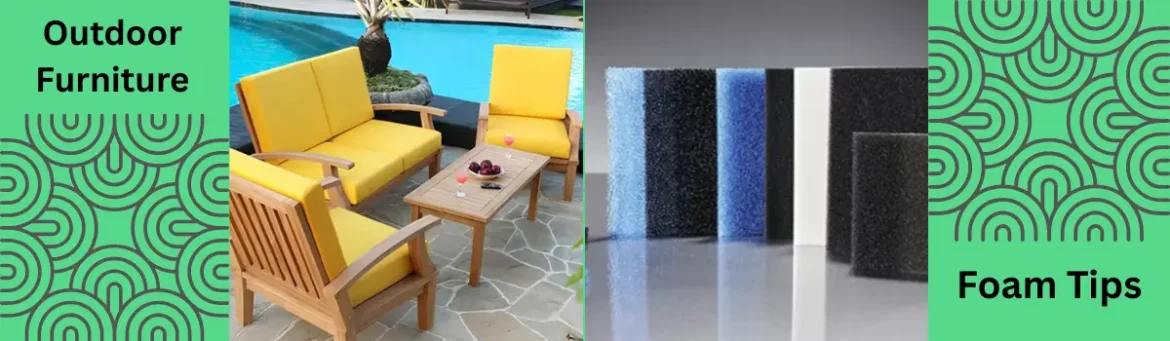
Outdoor Furniture Foam Types: Materials, Features, and Applications
Outdoor furniture has become an important part of modern living spaces, including gardens, patios, balconies, and poolside areas. Cushions used in outdoor furniture must withstand challenging environmental conditions such as sunlight, moisture, rain, and temperature changes. Because of these factors, the selection of the right outdoor furniture foam is essential for durability, comfort, and long-term performance.
Applications: Poolside furniture, Boat seating, Garden lounge cushions, Outdoor sofas and chairs.
Requirements for Outdoor Furniture Foam: Unlike indoor furniture foam, outdoor cushions must be designed to handle environmental exposure. Key requirements include Water resistance or quick drainage, Resistance to mold and mildew, UV stability, Good air circulation, Durability under frequent use.
Common Types of Outdoor Furniture Foam
a.) Polyurethane Foam (PU Foam): Polyurethane foam is one of the most widely used materials in furniture cushions due to its versatility and cost-effectiveness. Characteristics: Available in different densities and firmness levels, Lightweight and flexible, Comfortable cushioning.
Usage: Standard PU foam is typically used in outdoor cushions when combined with water-resistant covers or protective liners to reduce moisture absorption.
b.) Quick-Dry Foam (Reticulated Foam): Reticulated foam, commonly known as quick-dry foam, is specifically designed for outdoor environments. During manufacturing, the foam structure is modified to create large, interconnected pores, allowing water to pass through quickly. Characteristics: Highly open cell structure, Rapid water drainage, Excellent airflow and ventilation, Resistant to mold and mildew.
Because of its drainage properties, quick-dry foam is widely considered one of the best foam types for outdoor furniture.
c.) Latex Foam: Latex foam, derived from natural or synthetic rubber, is also used in certain outdoor cushion applications.
Characteristics: High elasticity, Durable structure, Good breathability
Foam Density Considerations for Outdoor Furniture
Foam density plays a critical role in the performance of outdoor cushions. Density is typically measured in kilograms per cubic meter (kg/m³).
Typical ranges include:
Low Density Foam: 20–24 kg/m³ (light-use cushions)
Medium Density Foam: 25–30 kg/m³ (general outdoor seating)
High Density Foam: 30–40 kg/m³ (premium outdoor furniture)
Note: Higher density generally results in better durability and longer cushion life.
Importance of Breathability and Drainage
Outdoor cushions must allow moisture to escape to prevent mold and odor. Foam with open-cell or reticulated structures allows air and water to pass through easily.
Key benefits include: Faster drying after rain, Reduced risk of mold growth, Improved comfort in humid climates
Choosing the Right Foam for Outdoor Furniture
When selecting foam for outdoor furniture, several factors should be considered: Exposure to rain and moisture, Frequency of use, Desired comfort level, Cushion thickness and firmness, Fabric and cover materials used
Conclusion
Outdoor furniture foam plays a crucial role in the comfort, durability, and performance of outdoor seating products. From standard polyurethane foam and high-resilience foam to specialized quick-dry reticulated foam, manufacturers have developed several materials suited to outdoor conditions.
Selecting the right foam type, density, and cushion construction ensures that outdoor furniture remains comfortable, durable, and resistant to environmental exposure over time.
Written by the Foam Villa Editorial Lab: Analyzing the global trends and chemical innovations that define the future of flexible polyurethane. From raw material sourcing to precision fabrication, we are your partner in high-performance foam solutions.
