
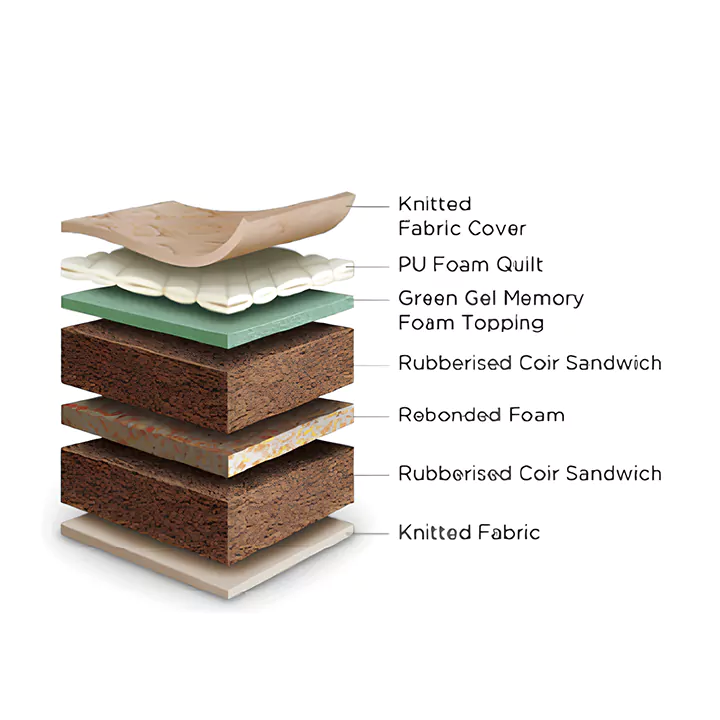
The Evolution of Support: Why the Architecture of Your Mattress Dictates Longevity
On average, a human being will spend nearly approximately one-third of their life—resting on a mattress. Over a single year, an adult accumulates upwards of 3,200 hours of contact time with this single surface. From a technical perspective, the mattress is the most frequently used “equipment” in a household, making its material composition the primary factor in long-term musculoskeletal health.
The Origin of the Mattress: From Necessity to Engineering
The concept of the mattress was born from the basic human need to insulate the body from the cold, hard ground. Early iterations were rudimentary—bags of straw, wool, or horsehair designed for thermal protection rather than orthopedic support.
The true revolution occurred during the industrial era with the introduction of steel coils, but it was the mid-20th-century development of Polyurethane and Memory Foams that changed everything. This shift allowed for “Contouring Support,” where the material finally began to adapt to the human shape, rather than forcing the human body to adapt to the surface. Today, we view the mattress not as a bag of filler, but as a sophisticated multi-layered system designed to manage gravity.
The Mechanics of Orthopedic Integrity
A high-performance mattress must solve two conflicting physical problems: it must be soft enough to relieve pressure but firm enough to maintain spinal neutrality.
When a surface fails to provide Pressure Relief, blood flow is restricted to the skin and soft tissues, triggering the brain to command the body to move. This “tossing and turning” disrupts the deep sleep cycles necessary for cognitive repair. Simultaneously, Spinal Alignment is critical; if the mattress allows the hips to sink too deeply, the lumbar spine is placed under constant tension, leading to the chronic back pain that plagues many modern professionals.
Individualized Requirements: Weight, Age, and Physiology
There is no “universal” mattress because human anatomy varies significantly across different demographics. The effectiveness of a support system is largely determined by the “load” placed upon it.
- Weight Dynamics: Heavier individuals require higher-density foam cores and higher ILD (Indentation Load Deflection) ratings to prevent “bottoming out.” Conversely, lighter individuals may find high-density foam too rigid, as they lack the body mass to engage the foam’s contouring properties.
- The Aging Factor: As we age, skin becomes thinner and joints more sensitive. For seniors, the priority shifts toward high-compliance materials like Latex or Memory Foam that minimize surface tension.
- Health Considerations: For those with chronic respiratory issues or allergies, hypoallergenic materials such as closed-cell foams or treated latex are essential for maintaining air quality during the 8-hour sleep window.

Restorative Logic: Why Sleep is the Ultimate Productivity Tool
In our modern, high-pressure landscape, sleep has evolved from a simple rest period into a critical biological defense mechanism. As our daily lives become increasingly dominated by digital interfaces, sedentary work, and intense professional expectations, the physiological “cost” of being awake has reached an all-time high.
The Digital Toll and Cognitive Fatigue
The shift toward prolonged mobile phone and screen usage has introduced a profound disruption to human biology. The blue light emitted by these devices—specifically within the 450–495 nm range—tricks the brain into suppressing melatonin, the hormone responsible for the onset of sleep. Beyond the chemical impact, the “infinite scroll” of digital content keeps the mind in a state of high arousal. This prevents the mental relaxation required to enter restorative deep sleep, leaving the mind cluttered and leading to a state of chronic burnout.

Physical Burden: Posture and the Modern Lifestyle
Current work-life scenarios have significantly worsened musculoskeletal health. Many professionals spend the majority of their day in a state of physical compression—whether sitting at a desk for eight hours or navigating long, stressful commutes. These activities place immense strain on the spinal discs and cervical muscles. Sleep is the only period during the day when the spine can truly decompress. If this window of rest is neglected, or if the support surface is inadequate, the physical strain of the day is “carried over,” manifesting as chronic pain and long-term spinal degradation.
The Biological Requirement Across the Lifespan
While the general recommendation for adults is seven to nine hours of rest, sleep requirements are actually a moving target that shifts with the body’s developmental stages. Infants and children require significantly more time for rapid physical growth and immune priming, while teenagers need extended rest to facilitate hormonal balancing. For the working adult, seven to eight hours is the non-negotiable threshold for tissue repair and metabolic health.
| Age Group | Recommended Duration | Primary Biological Function |
| Infants & Toddlers | 12 – 16 Hours | Rapid growth and brain development |
| School Age & Teens | 9 – 12 Hours | Cognitive loading and emotional regulation |
