
The Evolution of Support: Why the Architecture of Your Mattress Dictates Longevity
On average, a human being will spend nearly approximately one-third of their life—resting on a mattress. Over a single year, an adult accumulates upwards of 3,200 hours of contact time with this single surface. From a technical perspective, the mattress is the most frequently used “equipment” in a household, making its material composition the primary factor in long-term musculoskeletal health.
The Origin of the Mattress: From Necessity to Engineering
The concept of the mattress was born from the basic human need to insulate the body from the cold, hard ground. Early iterations were rudimentary—bags of straw, wool, or horsehair designed for thermal protection rather than orthopedic support.
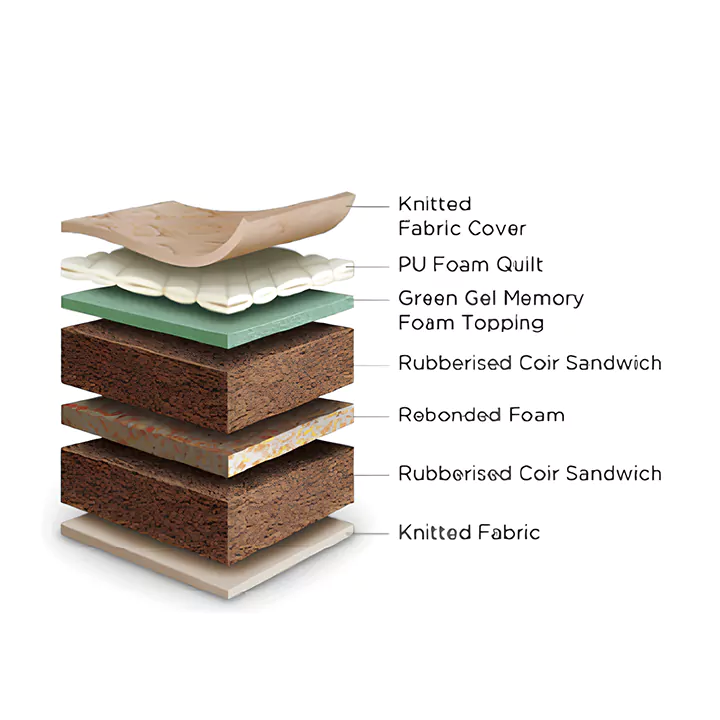
The true revolution occurred during the industrial era with the introduction of steel coils, but it was the mid-20th-century development of Polyurethane and Memory Foams that changed everything. This shift allowed for “Contouring Support,” where the material finally began to adapt to the human shape, rather than forcing the human body to adapt to the surface. Today, we view the mattress not as a bag of filler, but as a sophisticated multi-layered system designed to manage gravity.
The Mechanics of Orthopedic Integrity
A high-performance mattress must solve two conflicting physical problems: it must be soft enough to relieve pressure but firm enough to maintain spinal neutrality.
When a surface fails to provide Pressure Relief, blood flow is restricted to the skin and soft tissues, triggering the brain to command the body to move. This “tossing and turning” disrupts the deep sleep cycles necessary for cognitive repair. Simultaneously, Spinal Alignment is critical; if the mattress allows the hips to sink too deeply, the lumbar spine is placed under constant tension, leading to the chronic back pain that plagues many modern professionals.
Individualized Requirements: Weight, Age, and Physiology
There is no “universal” mattress because human anatomy varies significantly across different demographics. The effectiveness of a support system is largely determined by the “load” placed upon it.
- Weight Dynamics: Heavier individuals require higher-density foam cores and higher ILD (Indentation Load Deflection) ratings to prevent “bottoming out.” Conversely, lighter individuals may find high-density foam too rigid, as they lack the body mass to engage the foam’s contouring properties.
- The Aging Factor: As we age, skin becomes thinner and joints more sensitive. For seniors, the priority shifts toward high-compliance materials like Latex or Memory Foam that minimize surface tension.
- Health Considerations: For those with chronic respiratory issues or allergies, hypoallergenic materials such as closed-cell foams or treated latex are essential for maintaining air quality during the 8-hour sleep window.
